


The “Shubert” Theater is a renowned American theater built in 1913 for the Shubert brothers. It was named in honor of their late brother, Sam S. Shubert. Currently, the theater is managed by the theatrical company “The Shubert Organization.” More about the “Shubert” Theater on manhattan-trend.
The Founding of the Theater
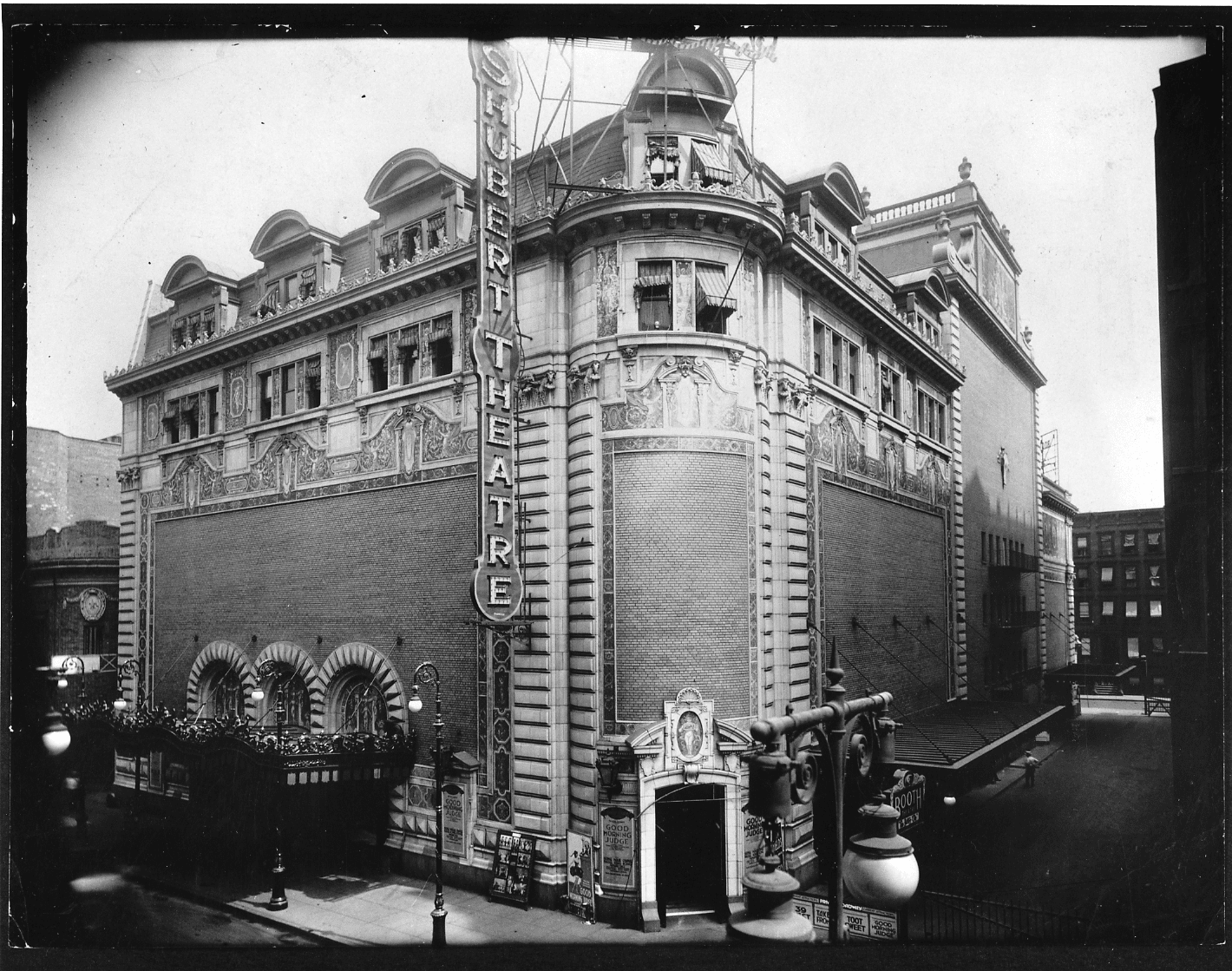
The “Shubert” Theater is located at 225 West 44th Street in Manhattan’s theater district. During the early 1900s, theatrical activity in Manhattan flourished, leading to the construction of numerous theaters around Broadway. Most of these venues were built by the Shubert brothers, who were prominent theatrical syndicates of the time. By 1924, “The Shubert Organization” owned approximately 86 theaters across the United States, including the “Shubert.”
The story of the “Shubert” Theater began in April 1912, when Lee Shubert and American theatrical director Winthrop Ames purchased a site at 219–225 West 44th Street and 218–230 West 45th Street to build two theaters. These theaters were designed to be connected yet separate venues. The larger theater was named “Shubert,” while the smaller one was named “Booth.” Lee and J.J. Shubert dedicated the newly built theater to their brother Sam S. Shubert, who tragically died in a 1905 train accident.
About the Theater
Both “Shubert” and “Booth” were designed by architect Henry Beaumont Herts and executed in the Italian Renaissance style. Externally, the theaters are nearly identical, with only minor differences in design. The “Shubert” Theater, like the “Booth,” is triangular in shape with a rounded corner at the entrance. Its façade is crafted from terracotta and brick laid in an English cross pattern. The top of the main structure is adorned with a dentilled cornice and a metal mansard roof. Decorative plasterwork embellishes the walls, and the façade features three large arches providing emergency exits from the lobby. Above the arches are sgraffito paintings, partially covered by modern canopies. Female figures are depicted above the arches, while the upper portion of the façade includes small triple windows. The theater’s metal-and-glass doors add to its classic appearance. A central sign reading “The Shubert Theatre” graces the front of the building above the main entrance.
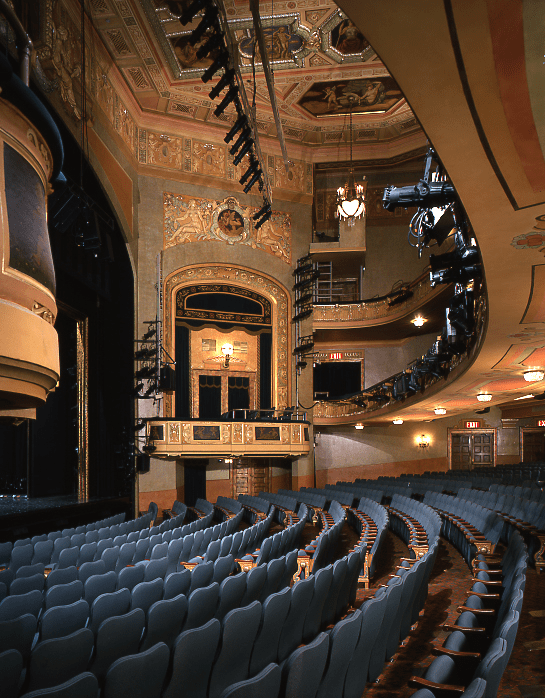
Inside, the theater boasts a lobby, an auditorium, dressing rooms, offices for the Shubert brothers, and other functional spaces. The lobby features green marble finishes and a mosaic marble floor adorned with leafy patterns. The rectangular portion of the lobby has a vaulted ceiling divided into sections with plaster molding, while the elliptical section has a domed ceiling decorated with plaster and laurel leaf motifs.
The auditorium includes an orchestra level, two balconies, box seats, and a proscenium stage. It can accommodate approximately 1,502 people. The auditorium’s décor includes intricate plasterwork and fresco elements.
The stage is sizable, measuring 35 feet (11 m) deep and 80 feet (24 m) wide. The proscenium arch spans 38 feet 9 inches (11.81 m) in width and 28 feet 6 inches (8.69 m) in height. The depth of the auditorium to the proscenium is 33 feet 10 inches (10.31 m), extending to 36 feet (11 m) to the back of the stage.
The Theater’s Activities
The theater officially opened in 1913 with a production of Hamlet starring Forbes-Robertson in the lead role. This production would pave the way for the theater’s enduring success.
During this early period, the “Shubert” hosted numerous acclaimed productions, including Caesar and Cleopatra, A Thousand Years Ago, The Bond Street Beauty, Trilby, The Copperhead, Once Upon a Time, Good Morning, Judge, and The Magic Melody, among others.
From the 1920s to the 1950s, the theater featured productions such as Blue Flame, Othello, Gay Paree, Countess Maritza, A Night in Venice, The Vagabond King, The Doctor’s Dilemma, Kiss Me, Kate, Paint Your Wagon, and The Millionairess.
Between the 1960s and the 1980s, notable performances included Stop the World – I Want to Get Off, The Apple Tree, Golden Rainbow, Promises, Promises, Here’s Where I Belong, Sea Scape, A Constant Wife, and more.
In 1975, the theater witnessed the longest-running production in Broadway history: the musical A Chorus Line, which ran for 15 years with a total of approximately 6,137 performances.
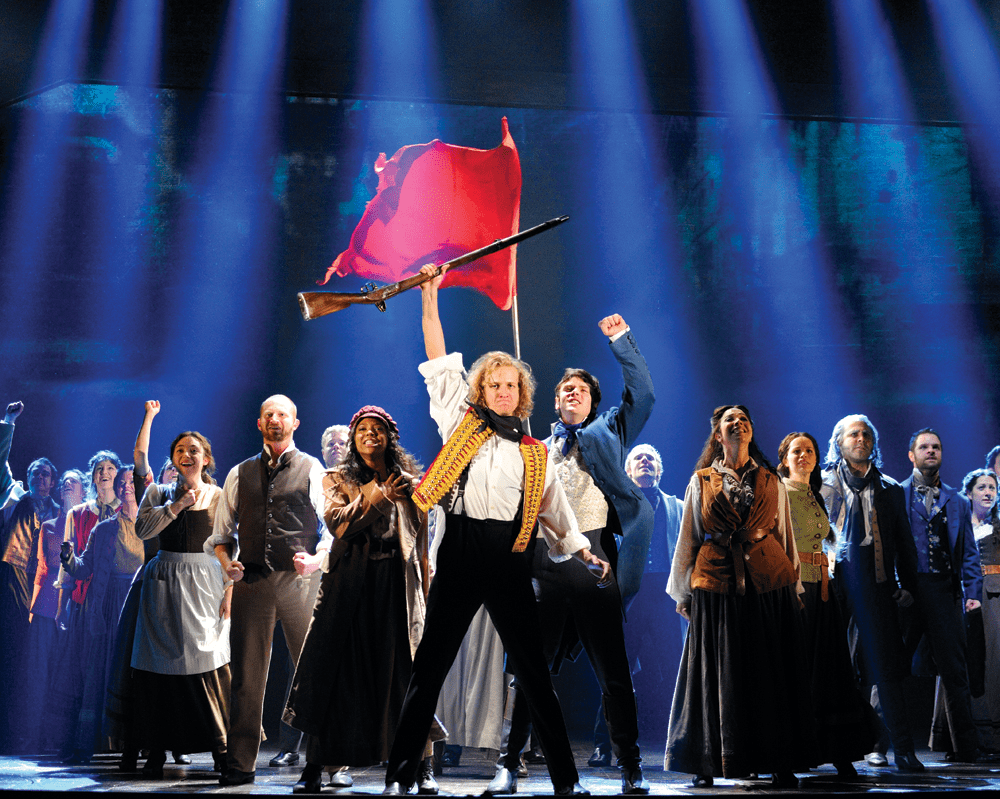
From the 1990s to the present day, the theater has showcased productions such as Chicago, Gypsy, Memphis, Matilda, It’s a Wonderful Life, Camelot, Oliver!, and Some Like It Hot.