When we picture the music that shook the world in the 1960s, our minds often jump to roaring stadiums, sprawling festivals, and sleek recording studios. Yet the real revolution kicked off in the cramped, smoke-filled basements of Lower Manhattan, where espresso flowed instead of whiskey and an overturned crate often doubled as a stage. The Greenwich Village folk scene became the crucible that launched future icons and turned raw acoustic tunes into the voice of a generation. Ironically, this legendary “coffeehouse” aesthetic wasn’t born out of design, but out of brutal economics and police crackdowns. Read on for the full story on manhattan-trend.com.
The Coffeehouse as a Legal Loophole, Not a Style
Today, performing in a coffeehouse may seem like a quaint romantic cliché, but in early 1960s New York, it was a pure survival strategy. By the autumn of 1960, more than fifty folk venues were operating across Greenwich Village, and most deliberately avoided applying for liquor licenses. The reason was strictly legal: the notorious Cabaret Law. Passed back in 1940, the ordinance required venues serving food and alcohol to secure a special police license to host live music. For basement venue owners, running a fully licensed music club was prohibitively expensive and fraught with red tape.
So the Village bohemians exploited a loophole. The legendary Gaslight Cafe, opened in 1958 by John Mitchell at 116 MacDougal Street, strictly refused to serve booze. This allowed it to stay open all night, while performers earned their keep in a “basket house” format—passing around a tip basket after each set. Still, the police pushed back relentlessly, slapping the venue with nightly summonses for operating an “unlicensed cabaret.” According to folk veteran Dave Van Ronk, Gaslight owner Clarence Hood was forced to appear in court for over a hundred consecutive days.
Tensions between city hall and the bohemian quarter steadily mounted. In November 1961, eleven venues banded together to form the Greenwich Village Coffee House Association, fighting to secure a distinct regulatory status for coffeehouses from the city council. At these hearings, actor and folk artist Theodore Bikel captured the absurdity perfectly: society comfortably tolerates a drunk at a bar, yet looks with deep suspicion upon a poet or a folk singer.
The pressure boiled over into the streets. Those squeezed out of the cramped subterranean rooms gathered at an outdoor counter-venue: the Sunday afternoon hootenannies around the Washington Square Park fountain. When city officials attempted to outlaw these impromptu acoustic jams, musicians pushed back. On April 9, 1961, the clash culminated in the celebrated “Beatnik Riot,” cementing the Village’s reputation as an ungovernable haven of defiance.
Four Rooms and a Street Entrance
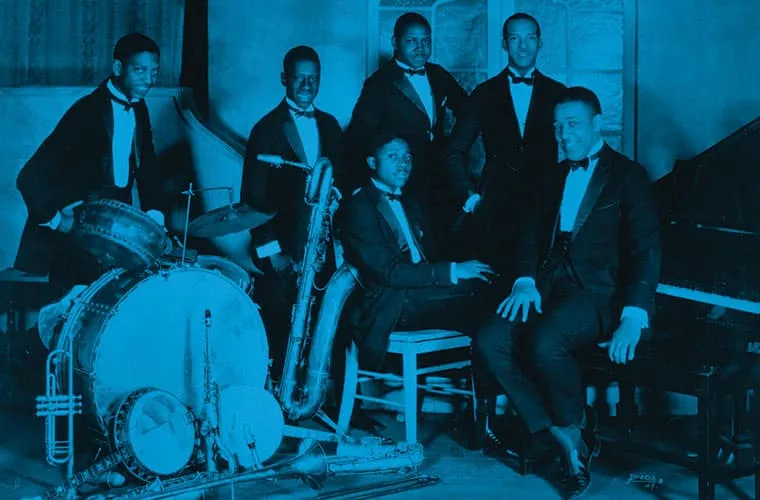
This musical geography required no flashy billboards—everything was concentrated along a few adjacent blocks, where former stables and basement eateries were reimagined into sacred ground. One of the loudest epicenters was Café Wha? at 115 MacDougal Street. It was in this 300-seat subterranean den, founded in 1959 by Manny Roth, that Bob Dylan made his New York debut in January 1961.
For prestige and an actual paycheck, musicians headed to Gerde’s Folk City at 11 West 4th Street. Formerly an Italian eatery run by Mike Porco, it held a crucial advantage over its peers: a bona fide liquor license. Here, in April 1961, Dylan played his first paid gig, opening for blues titan John Lee Hooker. On Monday nights, the venue buzzed with rowdy open-mic hootenannies. Regrettably, the historic structure itself has not survived to this day.
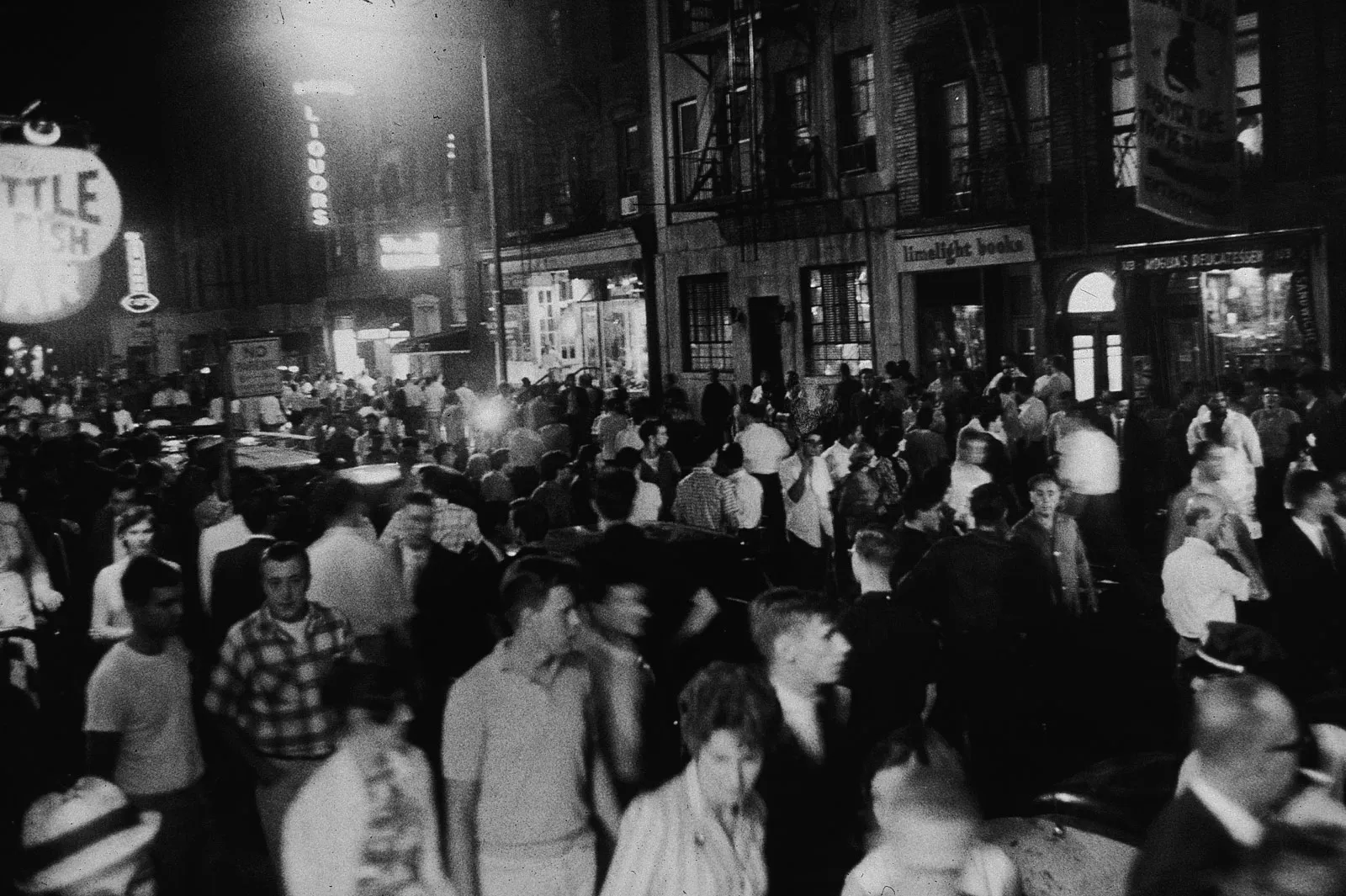
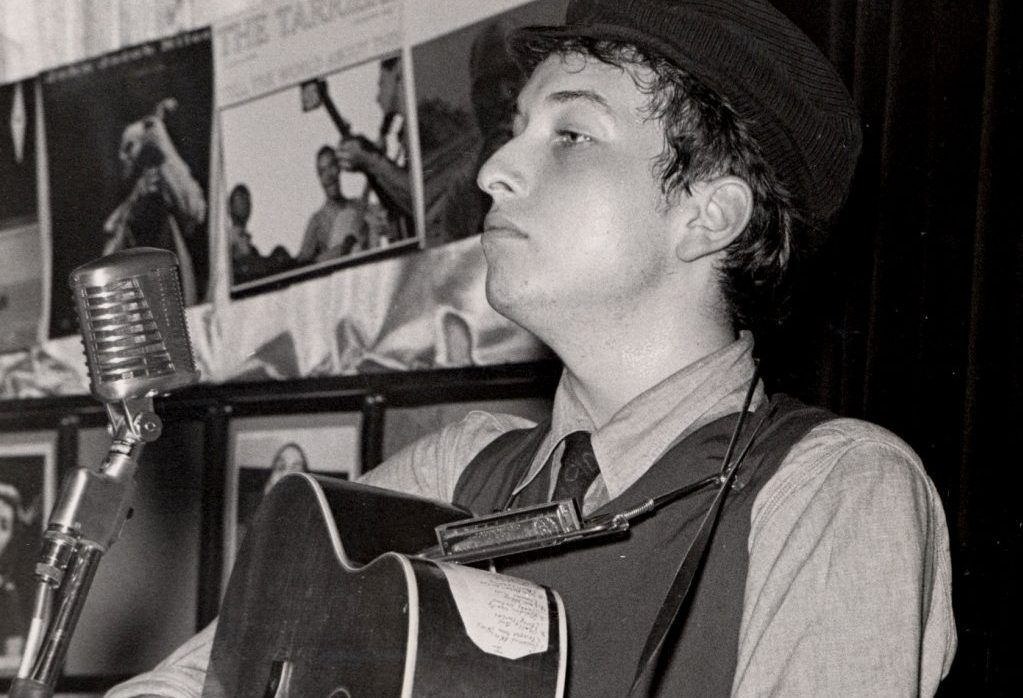
At the Gaslight and the adjoining Kettle of Fish—separated by nothing more than a shared wall—the inner circle gathered. Within these rooms, the young Dylan fell in with his key mentors, Dave Van Ronk and Paul Clayton. In fact, he typed out the lyrics to his monumental masterpiece, “A Hard Rain’s a-Gonna Fall,” on the second floor above the cafe, on a typewriter borrowed from comedian Hugh Romney.
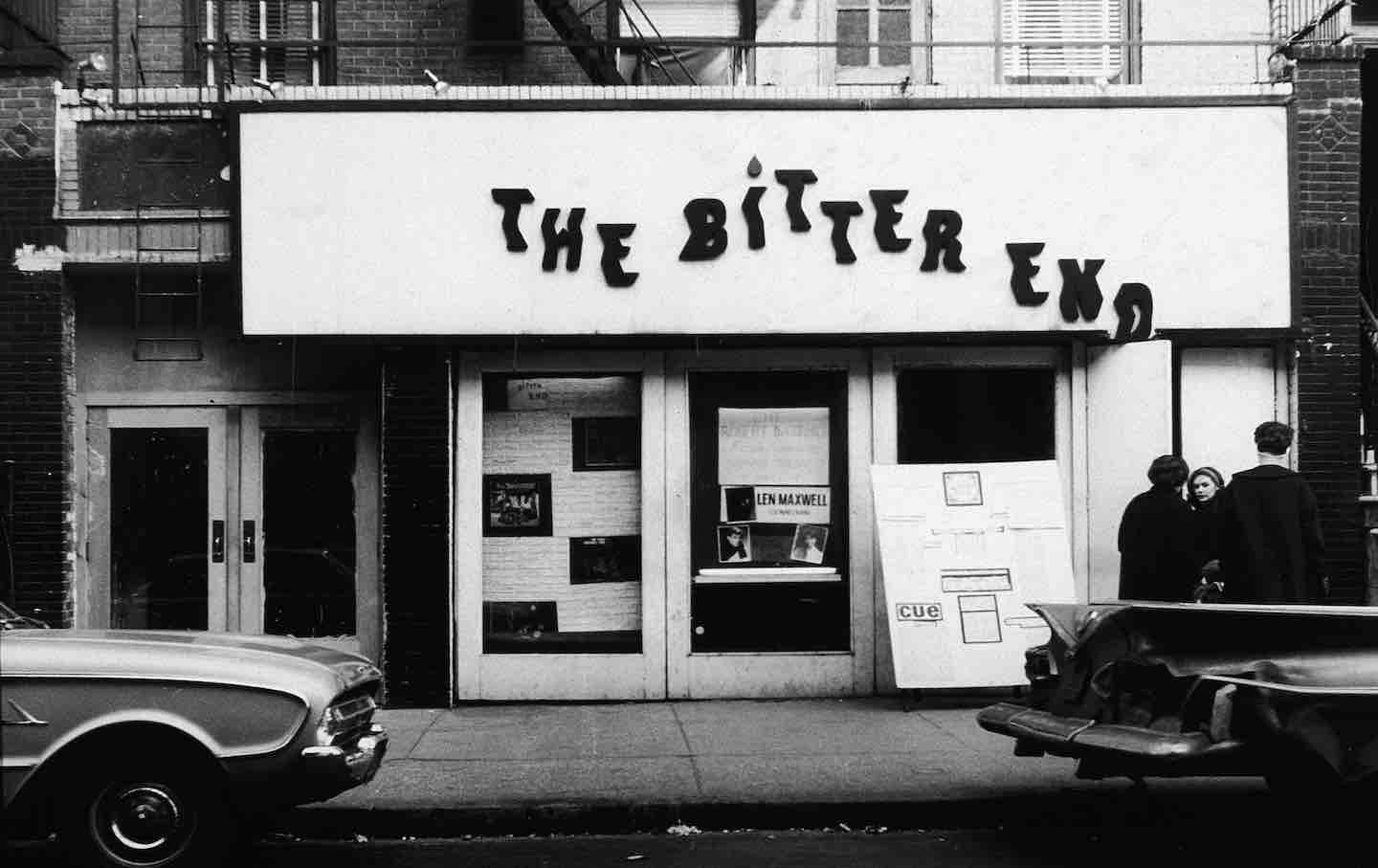
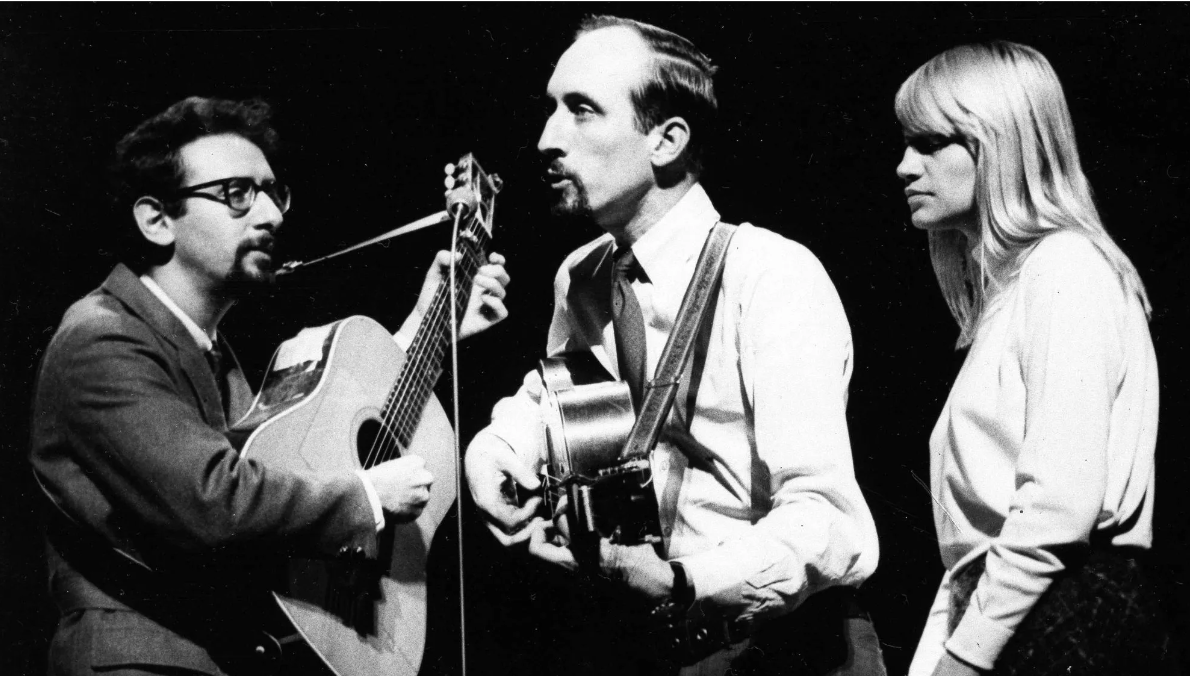
The final cornerstone of this classic quartet was The Bitter End at 147 Bleecker Street. Founded in 1961, it served as the birthplace of Peter, Paul and Mary, assembled by manager Albert Grossman from regulars on the local circuit. A few years later, in 1964, Café au Go Go surfaced on the very same street, signaling the arrival of a new era: this was where Jimi Hendrix, the Grateful Dead, Jefferson Airplane, and Cream would stage their early New York breakthroughs.
The Hit Engine: Review, Contract, Cover
It is easy to imagine underground prodigies being discovered by serendipity, but the Village operated with well-oiled efficiency. Everything began with the right set of ears in the right room. In late September 1961, Bob Dylan played an opening set at Gerde’s for the Greenbriar Boys. On September 29, critic Robert Shelton published a career-defining review in The New York Times. Hailing the 20-year-old newcomer as a “bright new face,” Shelton astutely noted that Dylan’s voice was “anything but pretty” and that he was writing songs faster than he could memorize them.
Shelton’s write-up acted like a spark to dry kindling. Weeks later, veteran A&R man John Hammond signed Dylan to Columbia Records, brushing off skeptical colleagues who openly questioned his sanity. Even so, Dylan’s self-titled debut in March 1962 flopped commercially. The true bridge from dimly lit cellars to mainstream airplay turned out to be cover versions. In June 1963, Peter, Paul and Mary released their harmonic take on “Blowin’ in the Wind,” vaulting it straight to number two on the national pop charts. It was a watershed moment: music born in the Village could generate serious revenue.
Gerde’s served as a kingmaker for other legendary acts, too. In 1963, an obscure folk duo billing themselves as Kane & Garr took the stage to perform an early version of “The Sound of Silence.” Producer Tom Wilson was in the audience and promptly walked them in for an audition at Columbia; the world would soon know them as Simon & Garfunkel. When the pair returned to the Gerde’s stage in 1964 as certified stars, Dylan offered his signature coolness: witnesses recalled him ostentatiously chatting away with friends throughout their entire set.
What the Village Truly Exported
The scene’s greatest export was never dusty folk relics, but modern, deeply personal songwriting. Every tune was battle-tested live: if a lyric resonated with a hundred listeners in a humid basement, it was strong enough to win over the world. By the dawn of the 1960s, Greenwich Village had evolved into a cultural magnet, pulling in talent from across the nation—from Phil Ochs out of Ohio and Judy Collins from Colorado to Dylan via Minnesota.
Following Peter, Paul and Mary’s breakthrough hit, major-label talent scouts descended en masse upon Village coffeehouses. Some artists didn’t wait around for scouts and headed West to Los Angeles, laying the foundations for the sunny folk-rock explosion of The Byrds and The Mamas and the Papas. Songs also traveled via intimate peer-to-peer exchanges: Dylan would share unreleased lyrics with Nina Simone backstage, prompting her to record stunning interpretations like “Just Like Tom Thumb’s Blues.”
Across the Atlantic, the British and European folk revivals were thoroughly reshaped by Manhattan’s influence. Rather than remaining locked into the archival preservation of centuries-old ballads, musicians embraced the new American template: a solo troubadour with an acoustic guitar, delivering incisive commentary on war, labor, and the frictions of the modern city.
The Machine Unwinds: 1965–1966
The undoing of this fragile ecosystem began with its brightest star. Between 1964 and 1965, Dylan pivoted away from topical protest anthems, and his transition to electric instrumentation fractured the very community that had nurtured him. The Village basements proved simply too small—and too dogmatic—to contain the sheer velocity and volume of rock and roll.
By 1966, as music chronicler David Browne observed, the coffeehouse Village had turned into a caricature of itself. Tourist buses rolled in carrying sightseers eager to gawk at authentic “beatniks,” and the once-vibrant scene became smothered in commercial kitsch and novelty parodies. The creative spark was extinguished, replaced by a commodified nostalgia.
New York’s genuine vanguard drifted eastward into the East Village, where The Velvet Underground was already taking shape at the Dom. The golden age had drawn to a close: Folk City relocated in 1970, morphing into a standard multi-genre club, and in 1971, the storied Gaslight quietly shut its doors for good.