


Manhattan has rightfully earned its reputation as the heart of American performing arts. This is where you’ll find the world-famous artistic hub: 41 Broadway theaters, each with a seating capacity of 500 or more. Together, Broadway and London’s West End represent the pinnacle of commercial live theater in the English-speaking world. Here are some little-known facts about this flagship of American theatrical culture, brought to you by manhattan-trend.com.
Only 4 Theatres Actually on Broadway
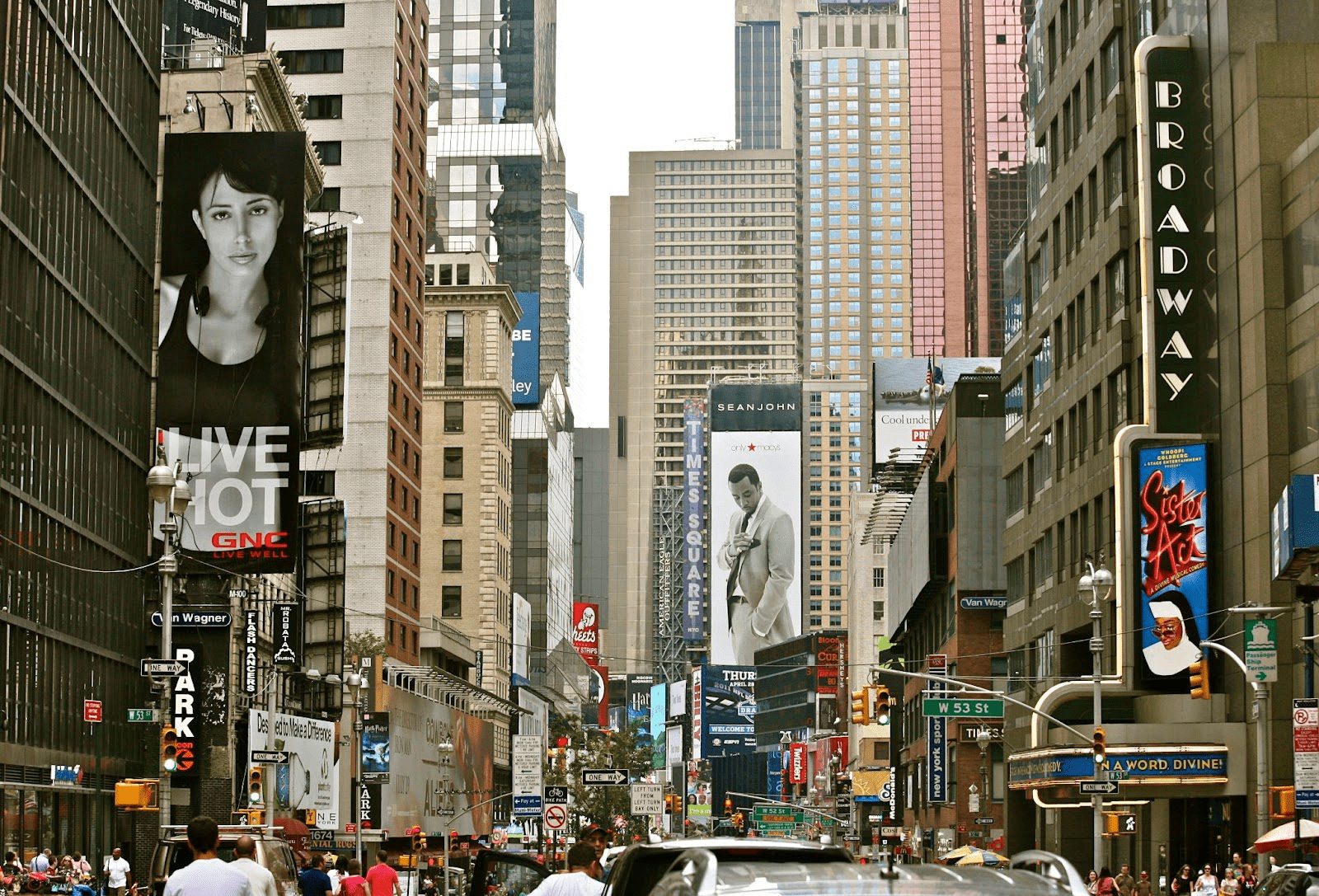
While there are 41 Broadway theaters, only four are located directly on Broadway itself: The Winter Garden, The Roundabout, The Marquis, and The Broadway Theatre. To be considered a Broadway theater, a venue must have at least 500 seats and be located between 40th Street and 54th Street, and between the west side of 6th Avenue and the east side of 8th Avenue.
The “Great White Way”
In the mid-18th century, the first theater opened in Lower Manhattan. Around the same time, Benjamin Franklin was beginning his experiments with electricity. Broadway became one of New York City’s first streets to be fully illuminated by white electric lights in the 1890s. This is why it earned the nickname the “Great White Way.” By 1910, incandescent lights began illuminating Broadway marquees as architects recognized the advertising potential of bright lights.
Interestingly, during World War I, Broadway’s lights went dark. Public demand then led the government to increase coal consumption, allowing the street to reclaim its status as the “Great White Way.” In the 21st century, numerous illuminated signs, posters, and marquees advertise shows and musicals.
New York City’s Longest Street
Broadway is the longest street in the city, even extending beyond its borders. The street crosses Manhattan Island from south to north, stretching into the Bronx and then all the way to Albany, the capital of New York State. Its name comes from the Dutch phrase “breede wegh,” meaning “broad road.” It’s one of New York City’s oldest north-south thoroughfares, with a history dating back to Native American times. The first written mention of Broadway on maps was recorded in the 1700s.
Broadway’s Longest-Running Show
In 1988, the musical “The Phantom of the Opera” premiered on Broadway. It is one of the most beautiful and spectacular productions in theater history. It has been seen by over 160 million people in 46 countries and in 21 languages. In 2018, the show celebrated its 30th anniversary on Broadway. By then, the musical had been performed over 12,500 times! It is Broadway’s longest-running show.
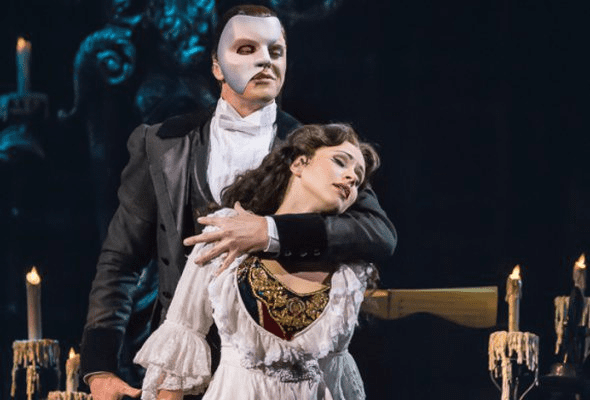
“The Phantom of the Opera” tells the story of the beautiful singer Christine Daaé, who becomes the obsession of a mysterious musical genius. This genius, known as the Phantom, terrorizes the Paris Opera House. Over its 30 years on Broadway, 15 different actors have played the role of the Phantom. Norm Lewis was the first African American actor to perform the role, and Ali Ewoldt was the first Asian American to play Christine. Each actor who played the Phantom received their own custom-made mask.
The Second Longest-Running Show
“Chicago” is the second longest-running Broadway show, having premiered in 1975. The musical is set in the 1920s. It’s the story of two rival murderesses, Velma and Roxie, who are serving time in prison. Velma killed her husband and sister, while Roxie killed the man she was cheating on her husband with. Velma builds connections with the prison matron and enlists the help of a Chicago lawyer. The lawyer turns Velma into a celebrity and later takes on Roxie’s case as well. Both women, having gained fame, begin to compete for media attention. Interestingly, the plot is based on a real 1924 murder case in Chicago.
The Highest-Grossing Show
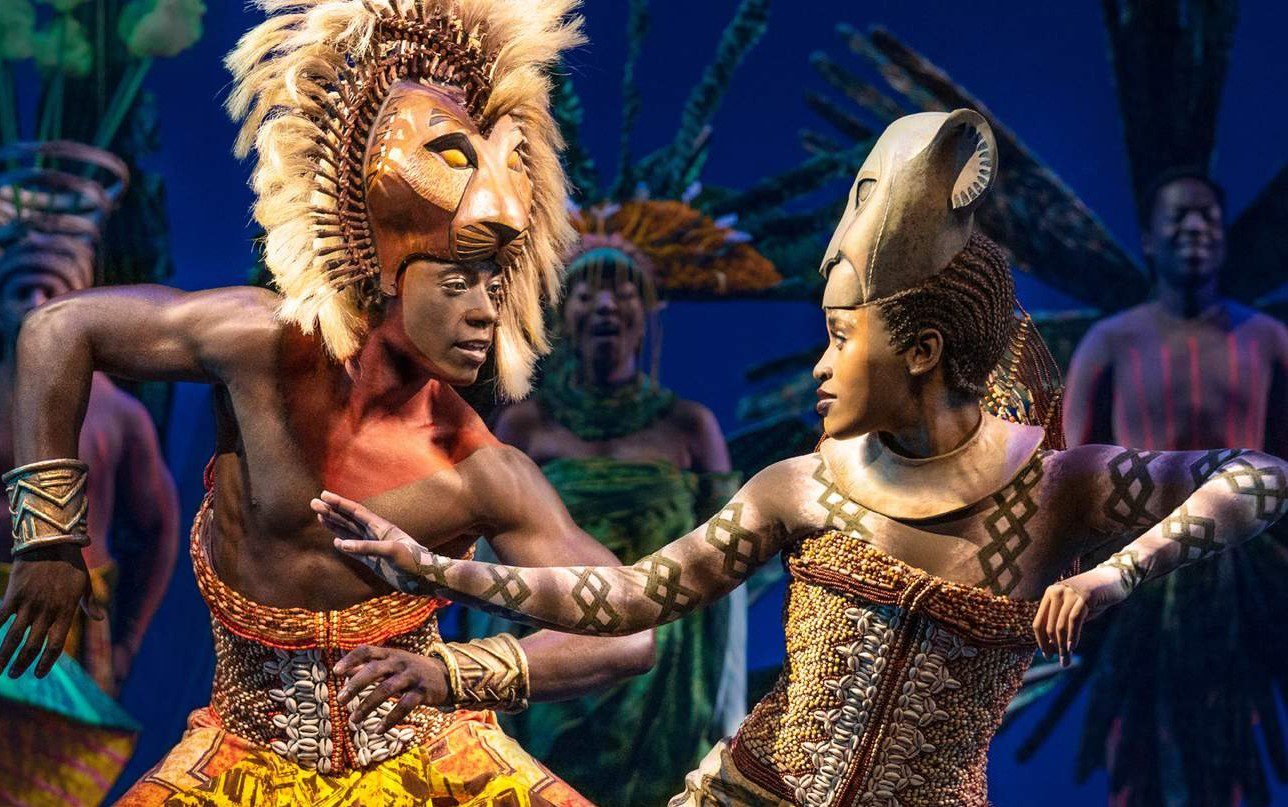
“The Lion King” is Broadway’s highest-grossing show. Over 20 years, the musical has grossed $1.4 billion – an average of $2 million per week. The show is based on the 1994 Walt Disney Animation Studios animated film of the same name. Notably, the show’s director, Julie Taymor, became the first woman in Broadway history to win a Tony Award for Best Director of a Musical.
Paranormal Phenomena
Rumor has it that over 100 spirits reside in the Palace Theatre. Notably, the spirit of the late actress and singer Judy Garland, who performed at the theater in the 1950s, is said to haunt its halls. She suffered from depression and made several suicide attempts. The star died at age 47 from an accidental overdose of barbiturates, drugs with a sedative effect. According to eyewitness accounts, Garland has appeared near a door in the orchestra pit. Additionally, Louis Bossalina, an acrobat injured during a tightrope act in 1935, is also said to have found refuge here. He landed a double somersault incorrectly, causing internal bleeding and a fractured pelvis. Bossalina died in 1963.
Other reported apparitions include: a sad little girl looking down from the mezzanine; a small boy playing with toy trucks; and a man in a brown suit walking past the theater manager’s office door. In 1995, psychic Elizabeth Baron claimed that the spirits of the Palace Theatre are filled with pain, anxiety, and unhappiness; they are stuck in their stubbornness, unwilling to leave the place.
Pocket-Sized Tonys
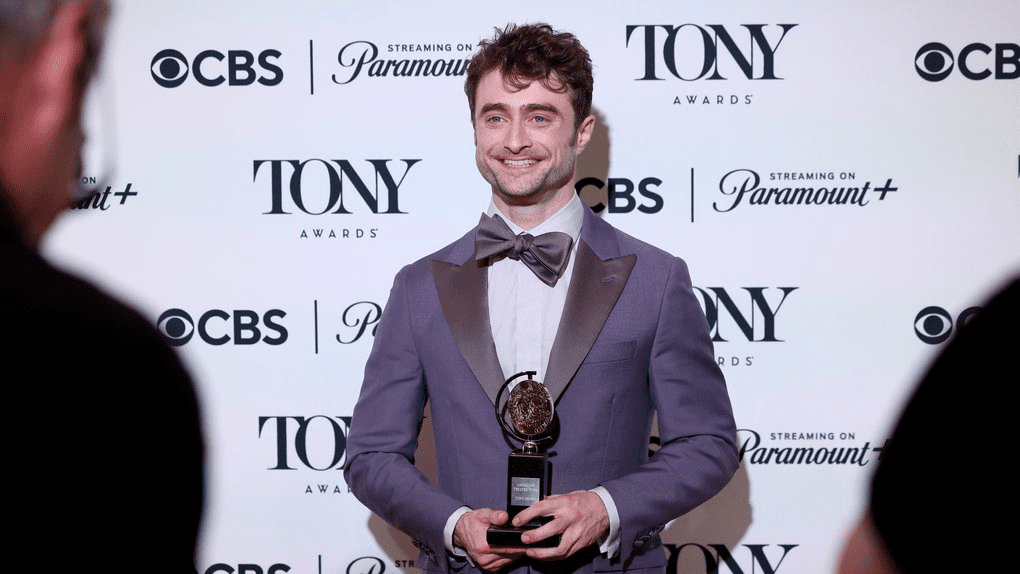
Tony Awards once fit in a pocket. Instead of the iconic statuettes, winners received miniature prizes along with scrolls. Specifically, men usually received lighters, while women were given cosmetics or jewelry.
In general, the Tony Awards recognize excellence in live Broadway theater. The awards are presented annually in Manhattan. They were established in 1947 and named after Antoinette Perry – a theater actress, director, and producer. The Tonys are the theatrical equivalent of the Oscars. Interestingly, in 1947, a ticket to the Tony Awards ceremony could be purchased for just $7.
Audiences are Predominantly Female
According to the 20th annual report on Broadway audience demographics for the 2016–2017 season, 66% of Broadway attendees were women. Additionally, the study showed that approximately 50% of respondents purchased their tickets online.
The All-Female Creative Team
In 2016, “Waitress” premiered. It was a musical with an all-female core creative team. Women wrote the music and lyrics, choreographed and directed the show, and designed the costumes. However, the cast did include male actors. The musical tells the story of Jenna Hunterson, a baker and waitress in an abusive relationship with her husband, Earl. After Jenna unexpectedly becomes pregnant by Earl, she begins an affair with her gynecologist, Dr. Jim Pomatter. Seeking a way out of her troubles and at the urging of her friends, Jenna enters a pie-baking contest, seeing the grand prize as her chance for happiness.
The only other Broadway musical with no male involvement in its core creative team was “Runaways” in 1978. It was entirely created by one woman, Elizabeth Swados.
The Mysterious Flying Carpet
The secret behind the flying carpet in the production of “Aladdin” baffles many. Set designer Bob Crowley has never revealed the technology he used to bring the show’s main attraction to life. There are three main theories explaining the “magic”:
A combination of clever stage design and advanced technology;
A hidden machine above the stage, equipped with winches and tracks, allowing the carpet to move in all directions;
Thin, almost invisible wires attached to the carpet, along with fans at each corner of the stage.
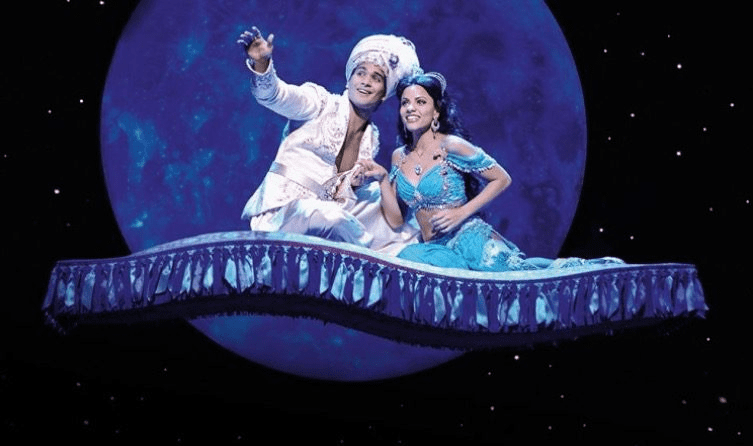
Whatever the method, Crowley has certainly managed to captivate and intrigue countless audience members.