Village East by Angelika is an old American cinema. Its building impresses not only with beauty but also with history.
Probably, not everyone knows that earlier this building was not intended for showing movies at all. It was built for theatrical performances. For whom the building was built and how the cinema appeared in it, read on manhattan-trend.
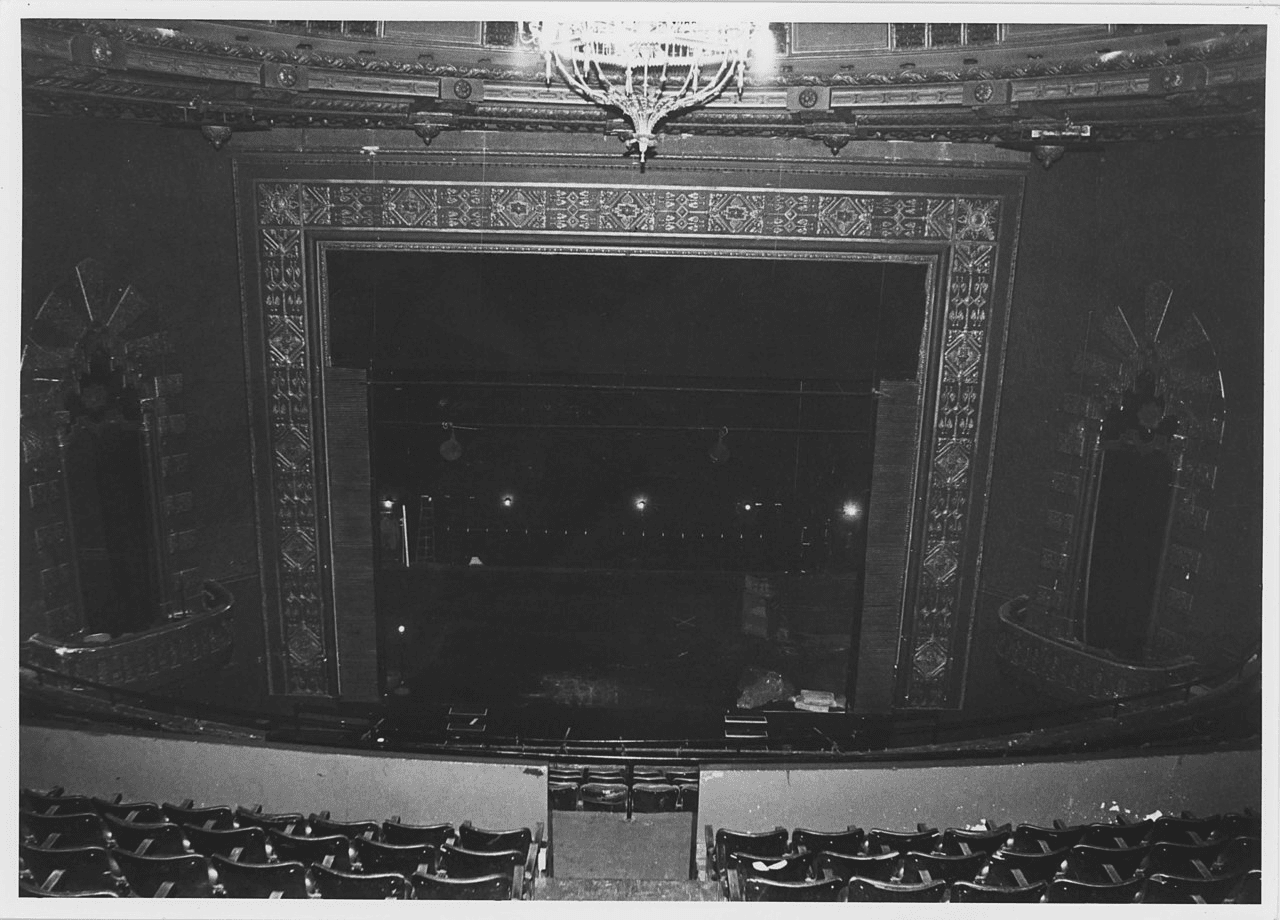
FOUNDATION AND ACTIVITIES OF THE THEATER
At the end of the 19th century, Jewish immigrants in New York began to move en masse to such areas of the city as the East Village and the Lower East Side. The majority of the Jewish diaspora, which numbered about nine percent of the city’s population, spoke their traditional language Yiddish. Thus, a variety of Yiddish theater districts appeared, where Jews could relax.
At the time, most of the first Yiddish theaters were located south of Houston Street. Later, many producers moved north and settled along Second Avenue.
Among these producers was Ukrainian Maurice Schwartz, who founded the Yiddish Art Theater in 1918.
Before, the Jewish theater troupe performed in various locations without having its own stage. Everything changed after an American lawyer, developer and Jewish leader attended the performances of the newly established theater. He was so impressed that decided to build a theater for the Yiddish theater troupe.
In 1925, Jaffe purchased a building plot on Second Avenue. Construction was supposed to be completed that same year. However, there were problems with the New York Department of Buildings (DOB), which would not give a building permit. However, the developer still managed to solve these issues and the theater opened in November 1926. The building was created in the Moorish Revival style and had 1,200 seats. In addition to the audience halls, it housed a variety of special rooms, such as office rooms for staff, a library, etc.
In the same year, the debut performance of the Yiddish troupe took place in the Louis N. Jaffe Art Theatre. It was the play The Tenth Commandment. The audience for the premiere included such theatrical figures as Daniel Frohman, Owen Davis and Robert Milton, as well as famous persons, such as Otto Kahn and Fannie Hurst.
In this year’s season, the Yiddish Art Theatre under the direction of Maurice Schwartz also staged such plays as Mendele Spivak, Her Crime, Reverend Doctor Silver, Wolves, Menschen Shtoib, Greenberg’s Daughters, The Gardener’s Dog, The Gold Diggers, On Foreign Soil, Alexander Pushkin and American Chasidim, etc. Great hopes were placed on this troupe but they did not come true. After two more seasons, the Yiddish troupe left the theater.
From 1930 to 1932, the Jaffe Art Theatre had different owners and received different names, such as Molly Picon Folks Theatre, Germans’ Folks Theatre, etc.
In 1932, the Yiddish troupe returned to the theater and performed there for two more seasons.
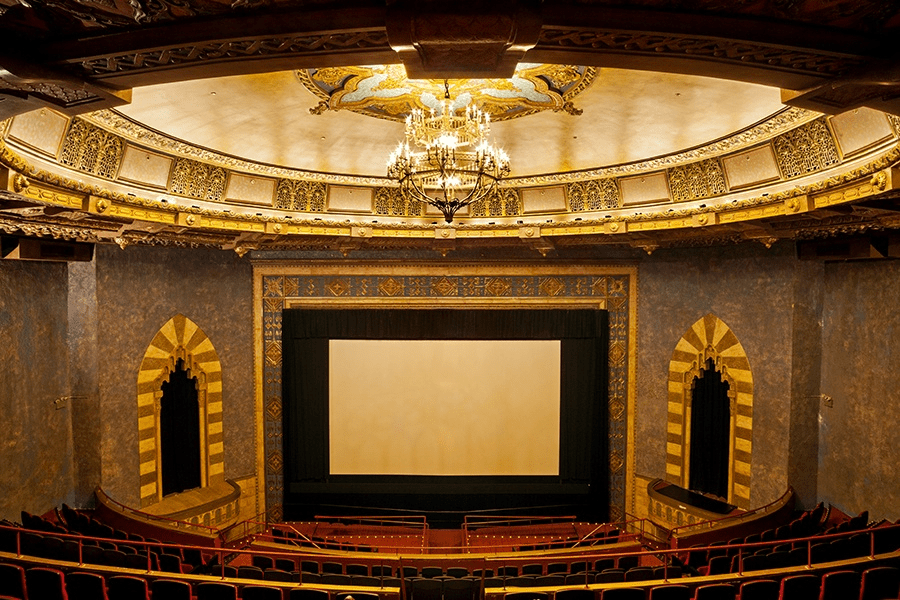
THE DECLINE OF THE THEATER AND THE ESTABLISHMENT OF THE CINEMA
After a certain time, the popularity of the Yiddish Theatre declined dramatically. It happened due to a decrease in the number of Jewish immigrants, the departure of the Jewish population from the East Village and Lower East Side, the Holocaust, etc.
Therefore, due to low demand, a cinema appeared in it. In 1937, Saulray Theaters Corporation leased the premises and the theater was named Century. This phenomenon was widespread at that time. However, the cinema did not exist for a long time because it was transferred to the management of the New York Bank. Therefore, from 1953, theatrical activity was revived again and it operated until 1988, after which it declined. Then, the premises of the theater were rented by the company City Cinemas, which used it as a cinema under the modern name Village East. After reconstruction, the Village East cinema officially opened in 1991. It is worth noting that during the restoration works, the architectural features of the building were preserved. At that time, Americans could see both Hollywood and indie films in the cinema.
In 2015, another restoration took place. In 2020, the cinema was temporarily closed due to the COVID-19 pandemic. It resumed the work in March 2021. Then, its manager became the US movie theater chain Angelika Film Center and the building received a new name Village East by Angelika. The modern cinema is mostly oriented towards showing new films, although sometimes retrospectives are broadcast as well.